
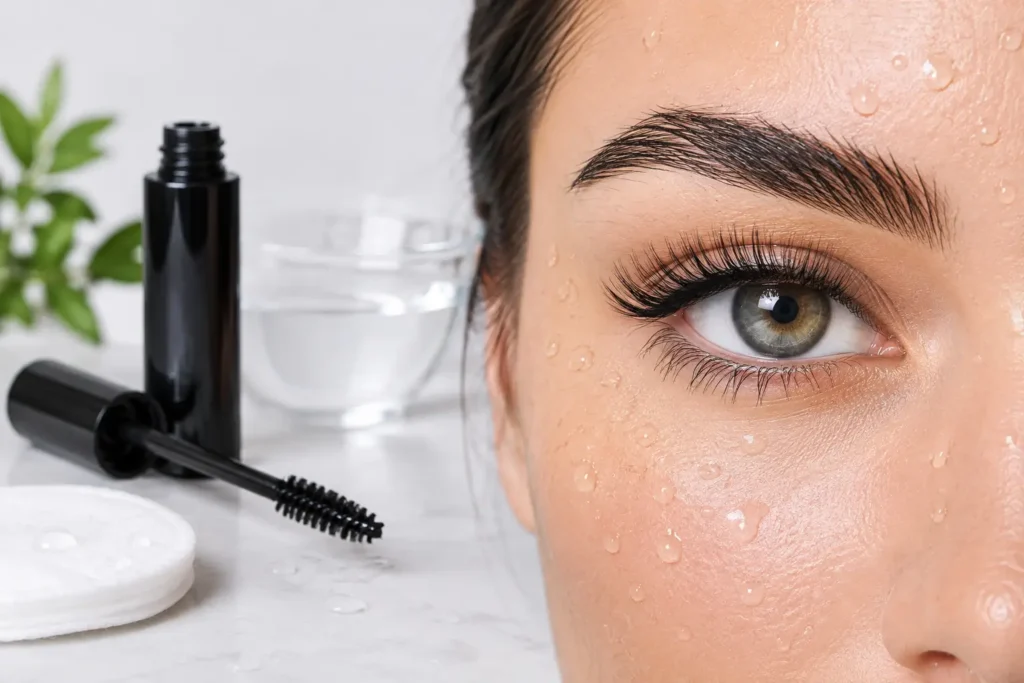


The same formula does not guarantee the same result on every client. Hair structure, porosity, previous tinting, home care products and processing time change both saturation and durability. That is why a lash and brow tint durability test is a working tool, not an unnecessary step – it helps you plan the procedure with a realistic expectation of the shade and how long it will last.
For brow artists and tinting specialists, the test is especially useful when you work with a new brand, a hybrid tint, an unfamiliar developer or a client with lightened, dry or unevenly colored hairs. It does not replace a sensitivity test and is not a promise that the result will be identical weeks later. It gives you control over the variables you can actually manage in the treatment room.
What the tint durability test shows
“Durability” often refers to two different things. The first is how well the pigment adheres to the hair and skin immediately after the procedure. The second is how the color holds up through regular washing, cleansing with cosmetics and the natural renewal of the skin over the following days.
With classic tints, the focus is usually on the color of the hairs. With hybrid tint there is also a visible stain on the skin, which depends heavily on preparation, oiliness and the client's routine. The same brown shade can stay dense on well-degreased skin but fade quickly with active sebum production or the use of oils and exfoliating products.
A professional test helps you assess four practical indicators:
- whether the chosen shade matches the skin undertone, hair color and desired intensity;
- how the hair takes the pigment and whether the processing time needs adjusting within the manufacturer's instructions;
- how evenly the individual areas of the brow or lashes are colored;
- what aftercare routine you should recommend so the result is not compromised.
This is also valuable information for pricing the service. When you know how a specific system works on different hair types, you avoid repeat corrections, wasted product and conversations with a client whose expectations were not set correctly.
Do not confuse the durability test with a sensitivity test
The sensitivity test, also known as a patch test, has a different purpose – to check whether the client has an adverse reaction to the ingredients. It is performed according to the instructions of the tint and developer manufacturer, usually before the procedure within the time frame set by the brand. Do not shorten the protocol on your own, even if the client has used brow tint in the past.
The tint durability test assesses the color and how well it takes. It can be done as a trial on a small, discreet area only if the product and your protocol allow it. If there is burning, redness, swelling, itching or any other sign of discomfort, stop the procedure and do not proceed with tinting.
With lashes, work with even greater precision. The eye area allows no compromise on preparation, protective eye patches, amount of product or processing time. Never use hair dye as an alternative to a professional product designed for lashes and brows.
When the test is most useful
You do not need to turn every tinting into a long experiment. There are situations where a trial test saves you risk and time. These include a first visit, working with a new tint, switching from a classic to a hybrid system, heavily lightened brows, laminated hairs or a client who wants a darker, more graphic result than usual.
It is also useful when a client says: “Tint never takes on me.” This statement does not automatically mean a darker shade or a longer time is needed. The cause may be leftover SPF, oils, makeup, cleansing balm, the wrong ratio of tint and developer or an improperly stored product. Check the technique first, then change the formula.
After brow lamination
Lamination can change the way the hair takes pigment. Depending on the system used, the condition of the hairs and the manufacturer's recommendations, the tint may give a more intense, warmer or uneven result. Do not assume that your standard tinting time applies to every laminated brow.
Work with products whose compatibility is clearly described and follow the steps of the specific system. When in doubt, take a more conservative approach within the permitted limits instead of chasing density with extended processing.
A practical protocol for a trial test
Consistency starts before you open the tube. Clean the area of makeup, sebum and cosmetic residue with a suitable professional product. Then dry it well. Moisture, an oily base or unevenly applied degreaser can make the color patchy and mislead you into thinking the problem is the tint.
Mix the tint and developer only in the ratio specified by the manufacturer. Do not mix systems from different brands unless the manufacturer explicitly confirms their compatibility. Different concentrations and consistencies can change how the pigment develops and make the test useless as a reference.
Apply a small amount with a precision brush to the chosen area. On brows, watch both the hair and the skin stain at the same time. On lashes, work with a minimal, controlled amount and avoid any contact with the mucous membrane. Time it instead of relying on guesswork.
Remove the product carefully according to the instructions and assess the result in good light. Do not make a final decision in the first few seconds. Some shades stabilize after light drying, and the color on the skin may look more saturated right after cleansing. Take a photo for your work records with the client's consent and note the shades used, the ratio, the time and the hair characteristics.
How to read the result without unnecessary corrections
If the hairs are colored evenly but the skin does not hold a stain, that is not necessarily a failure. With classic tint, this is often the expected result. With hybrid tint, consider whether the preparation was sufficient and whether the skin type allows a long-lasting skin stain. Do not promise a client with very oily skin the same skin durability you can achieve on dry skin.
If the color is too warm, too cool or darker than desired, do not correct it right away with another layer. First analyze why it turned out that way: the starting base, the time, the shade, the developer and the porosity all have a different effect. At the next visit, you can change the formula with a more suitable undertone or reduce the intensity according to the brand's instructions.
Uneven uptake is more often a sign of insufficient cleansing, cosmetic residue or a different hair structure than of a defective product. For a client who uses retinoids, acids, scrubs or strong cleansers around the brows, explain in advance that durability on the skin may be limited.
Aftercare is part of the result
Even the best-performed test has no value if the client washes their brows with a harsh cleanser that same evening. Give clear, short guidelines based on the tint used: avoid oils in the area, exfoliation, intensive rubbing and untested active products in the first few days. For lashes, remind them to cleanse gently and avoid products that may irritate the eyes.
Accurate communication also protects your reputation. Instead of saying the tint will “definitely” last a certain number of days, explain the difference between durability on the hair and durability on the skin. That way the client gets a professional forecast, not an advertising promise.
Keep a consistent protocol, quality tints and developers and good records of the formulas you use. This makes every next procedure more predictable – and a predictable result is the reason the client comes back to you.



