
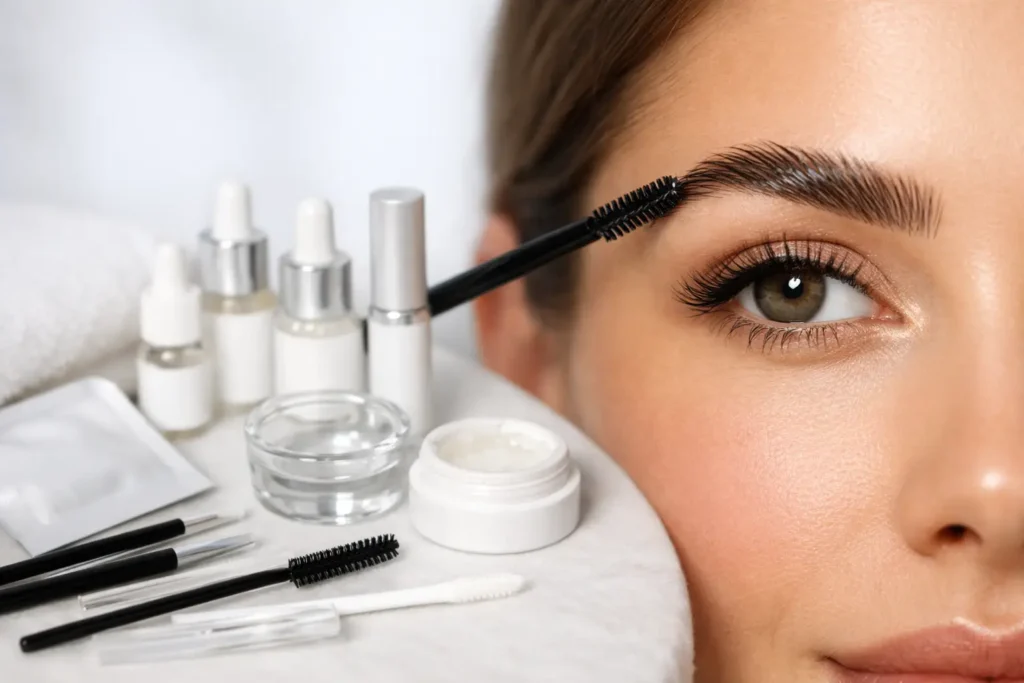


When a client wants neat, visually fuller, and naturally shaped brows, the result doesn't depend on technique alone. A professional brow lamination kit should provide a predictable process, from cleansing and softening the hair to setting, tinting, and final care. For a brow artist, this means fewer compromises during the procedure, better control, and easier cost planning for every visit.
A professional kit isn't just a convenient way to buy several products at once. It's a working system. If the individual steps aren't compatible, the active formulas are of unclear origin, or key supplies are missing, the procedure starts to require improvisation. And improvising around the eyes with active lamination formulas isn't a good business model.
What a professional brow lamination kit should include
The basic system usually works in three consecutive steps. The first product softens the hair and prepares it for a new direction. The second sets the shape, and the third restores, hydrates, or nourishes depending on the specific system. Brands use different names, such as Lift, Fix, Neutralizer, Nourish, Keratin, or Care, but the logic of the workflow remains similar.
A complete kit for real salon work often also includes a cleanser or degreaser, an adhesive or balm for setting the hairs in the desired direction, brushes, applicators, and protective supplies. If you offer tinting as part of the service, you'll also need hybrid tint or brow tint, a suitable developer, a non-metal dish, and a tool for precise application.
Not every system includes all of this. Small sachets, for example, are practical for testing a brand, for a mobile specialist, or for controlled dosing with a smaller client flow. Bottles and multi-dose packaging are more economical under regular use but require strict tracking of shelf life after opening, proper closing, and clean dispensing. A kit is right when its format matches your actual schedule, not just the price of the package.
Lamination system and complementary supplies
The most common restocking mistake is buying a lamination systemwithout planning the entire protocol. The procedure itself may be technically doable, but without a reliable cleansing product, micro applicators, spoolies, and proper aftercare, the work slows down and the final result loses precision.
Check whether the kit lets you work with your preferred tools and tints. If, for example, you build the service around hybrid tint, time the tinting according to the lamination brand's instructions. In some protocols, the tint is used after the setting step, in others the sequence is different. Don't mix the logic of one system with the timing of another just because the products look similar.
How to choose a professional brow lamination kit
The choice starts with your workload. A beginner brow artist building a client base needs a clear, easy-to-dose kit with understandable instructions and the option to restock individual steps later. A salon with a steady flow should look further ahead: how many procedures the package yields, whether the same line is in stock, and what one service actually costs.
Next comes the hair type. Thin, fine, and sensitive brows aren't treated like dense, coarse, or strongly downward-growing hairs. Processing time is determined by the manufacturer's instructions, the condition of the hair, and your professional assessment. A longer time doesn't mean a better lamination. It increases the risk of dryness, loss of elasticity, and uneven texture.
Pay attention to the packaging too. Individual sachets limit the product's contact with air and help with hygienic dosing. On the other hand, with many clients they can create more waste and aren't always the most cost-effective format. Pump or dispenser bottles are convenient, but only if the team works with discipline and doesn't touch the nozzle with used applicators.
For salon work, assess the kit against four practical criteria:
- a clear sequence and timing for each step;
- reliable information on ingredients, shelf life, and storage conditions;
- the option to restock the fastest-used products separately;
- consistent availability, so you don't have to switch systems with every new delivery.
The last criterion is often underestimated. Switching brands means getting to know the texture, activity, and behavior of the product on different hair types all over again. For a stable service, it makes more sense to build a working protocol around one main system and keep a reserve of the critical products.
Safety and professional protocol
Lamination is a procedure with active formulas, so a kit doesn't replace the need for training and proper assessment. Before working, check the condition of the skin and brows and gather information about allergies, previous reactions, and recent procedures in the area. If the skin is irritated, injured, or inflamed, the service is postponed.
Do a sensitivity test according to the manufacturer's instructions and the salon's internal protocol. It isn't a formality but real protection for both the client and the specialist. Just as important are disposable applicators, a clean work surface, and preventing cross-contamination between the packaging and the skin.
Controlling the amount is key. Apply the product evenly to the hairs without oversaturating them and without spreading it onto the skin. Work in small sections, watch the direction of the hair, and don't leave the first step on “a little longer” for a stronger effect. A predictable result comes from correct technique, not aggressive processing.
After the procedure, give specific home care instructions based on the system used. The client should know when they can get the area wet, which products to avoid, and when to contact a specialist if there's an unusual reaction. This reduces misunderstandings and protects the reputation of your service.
Calculate the cost of the procedure, not the price of the box
A kit may look like a good deal but turn out expensive if the quantity doesn't cover the stated number of applications or if you constantly have to add missing supplies. That's why you should calculate the cost per procedure: divide the price of the system by the actual number of services that can be safely performed, then add the share of applicators, brushes, tint, developer, protective materials, and the specialist's time.
This calculation also helps with pricing. Don't set the service price based only on what other salons charge. Factor in the quality of the products, the consultation time, hygiene standards, and the experience you use to choose the right protocol. A cheap procedure done with inconsistent materials rarely leads to loyal clients.
For trainers and academies, it makes sense to plan kits separately for demonstrations and for students' hands-on practice. Individually dosed formats give better control in a training setting, while large packages work well with clear organization, accurate accounting, and enough volume.
Restocking without disrupting your schedule
Keep a minimum stock threshold for each product in the system. Don't wait for the last sachet or an almost empty bottle, especially if lamination is a regular service on your menu. Check expiry dates, arrange products by date, and use the ones closest to expiring first.
VM Beauty offers a professional catalog of lamination systems, tints, tools, and hygiene supplies, making it easy to stock your entire workflow in one place. When choosing between brands, look at the technical information and available format, not just a familiar name or a current promotion.
A well-chosen kit gives you the freedom to work with confidence, with clean organization, a clear cost per service, and a result the client has a reason to come back for.



