
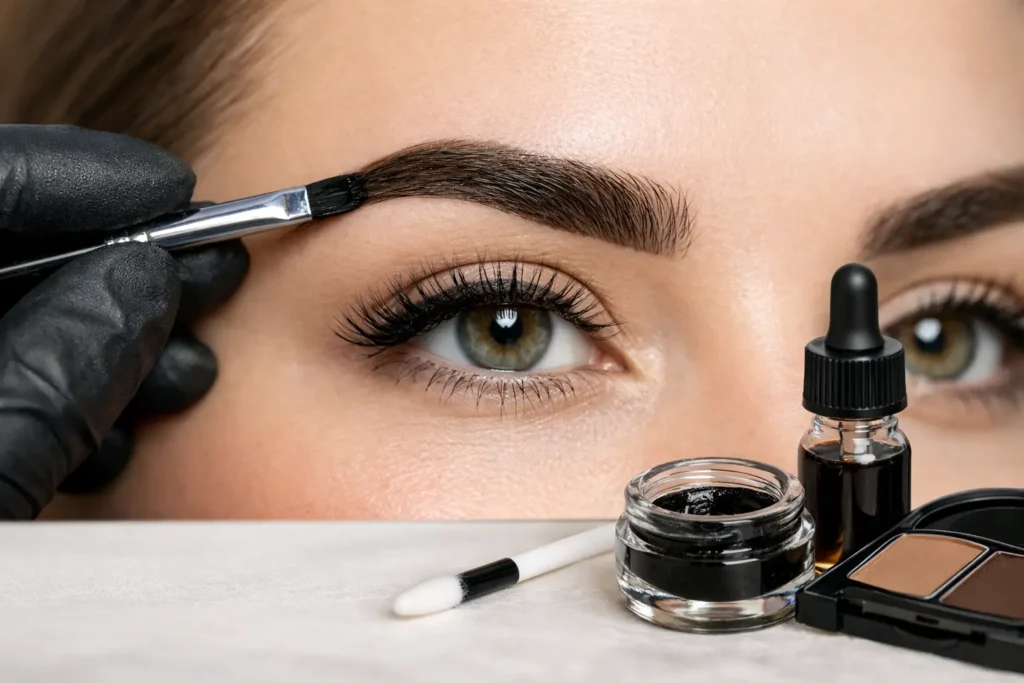


Clients don't judge brow tint only by how saturated the color is. They notice whether the shape is clean, whether the tone works with their skin's undertone, and whether the result keeps a professional look after the first few washes. This is exactly where hybrid brow tint has a place in a brow artist's work: it combines a visible stain on the skin with tinting of the hair and allows a more defined yet controlled result.
It isn't a universal solution for every client, and it doesn't replace proper brow architecture, prep, or application technique. But with a well-chosen shade and a followed protocol, hybrid tint helps build a more defined brow, especially with light, sparse, or unevenly colored hairs.
What sets hybrid brow tint apart
Classic tint works mainly on the hair and usually leaves a more delicate stain on the skin. Henna, on the other hand, is often chosen when you want a more noticeable skin stain, but it has its own specifics in prep, texture, and behavior on different skin types. Hybrid brow tint sits between these two categories as a professional system designed for more visible color on both hair and skin.
For salon practice, this means more room for personalization. With a client who has dense hairs, you can work with a softer stain to refresh the shape without a graphic effect. With gaps and a fine brow structure, the tint can visually support the architecture and make the result look more finished.
How long it lasts on the skin and hair isn't the same for everyone. Sebum, daily skincare, exfoliants, active cosmetic ingredients, skin type, and home routine all have a direct impact. Proper professional communication doesn't promise a fixed number of days but explains to the client what actually affects longevity.
When to choose hybrid brow tint
The best product isn't the one with the strongest color but the one that matches the requested result and the condition of the area. The hybrid system is especially practical when the client wants defined but natural-looking brows without daily makeup.
It's a good working option for light hairs, uneven density, faded old tint, or when you need a better-defined lower line. After brow lamination , it can also be used, but only in line with the compatibility and timing specified in the specific brand's protocol. After lamination, the hair is more sensitive to chemical treatment, so combining procedures too hastily can compromise its condition.
There are cases where a lighter classic tint is the better choice. This applies to clients who don't like a stain on the skin, have very oily skin in the T-zone, or prefer the most subtle effect possible. With very dry, flaking, or irritated skin, first assess the condition of the skin barrier, and postpone the procedure if there are contraindications.
Prep determines a clean stain
An uneven result is rarely just a problem with the formula. In most cases, the cause is insufficiently cleansed skin, residue from SPF, foundation, oils, sebum, or overly aggressive degreasing. Prep should be precise but gentle.
Before the procedure, cleanse the area with a suitable professional product and remove all makeup. If you use a degreaser or a special brow foam cleanser, follow the manufacturer's instructions. The skin should be clean and dry without being irritated or overly dehydrated.
Next comes the architecture. Measuring, symmetry, and working with the natural bone structure matter more than applying the same template to every client. Mark a shape that works with the face, not against it. If needed, protect the area around the outline with a suitable barrier product, taking care that it doesn't get into the areas that need to be tinted.
Before the first tint, do a sensitivity test according to the manufacturer's instructions and your professional protocol. Don't work on injured, inflamed, sunburned, or actively irritated skin. Good practice also includes a short consultation about allergies, recent peels, retinoids, and cosmetic procedures in the area.
Choose the shade by undertone, not by a photo
A dark color doesn't automatically mean a better result. A graphite shade that's too cool on a warm complexion can look gray and heavy. A brown tone that's too warm on a cool undertone can leave a reddish or orange cast. A professional choice starts with the natural hair color, the root color, the skin's undertone, and the client's style.
For blonde and light brown hair, softer light brown or neutral blends usually work. For dark brown hair, a medium to dark brown tone with a balanced temperature is often needed. Black isn't the standard answer for very dark hair, because it can make the brow look flat and overly harsh. In such cases, a deeper brown shade or careful mixing gives a more wearable result.
Work with the specific brand's palette, not with universal ratios from social media. Pigments, developers, and processing times differ. Record the formula used in the client card: shade, ratio, processing time, skin type, and how the color looked after removal. This saves time at the next visit and makes the service more predictable.
Why processing time isn't a minor detail
Left on longer, the tint doesn't always just get “a touch darker.” It can leave an overly dense stain on the skin, look visually heavy, or end up off the intended shade. On porous hairs, the color takes more intensely, while on oily skin the skin stain may not last as long.
That's why you should follow the manufacturer's timing and watch the process. With layering techniques, work cleanly, with a controlled amount of product and a clear sequence. The front of the brow usually needs softer saturation than the tail, so you don't end up with a hard “block” at the start.
Application technique for a professional finish
The consistency should allow even spreading without running. Mix the tint and activator into a smooth mixture according to the specified ratio. Don't improvise with developers from other systems if the brand doesn't list them as compatible. This changes how the formula behaves and makes the result unpredictable.
Apply with a suitable brushthat allows a crisp outline and good control. The first layer lays the foundation of the shape. Additional layers can add density to the tail or to areas with missing hairs, but they shouldn't replace proper architecture.
When removing, work carefully and don't rub roughly. Remove the product evenly so you can assess the true tone. If a correction is needed, it should be measured. Excessive reapplication on already treated skin increases the risk of unnaturally dark areas and discomfort.
Aftercare and realistic expectations
After tinting, give clear, short instructions. For the first 24 hours, the client should avoid getting the area wet, steam, saunas, swimming pools, very oily products, and exfoliating cosmetics around the brows. Using retinoids, acids, and harsh cleansers in the area can speed up fading.
It's important to explain that the stain on the skin will soften naturally. This is an expected process, not a sign of poor tint quality. How long the effect lasts on the hair depends on the growth cycle, washing, and home care.
For a specialist, a good hybrid tint is part of the whole system: proper consultation, clean prep, a reliable product, an accurate shade, and constant cost control. In VM Beauty's professional catalog, brow artists can build their work kit with tints, activators, brushes, supplies, and hygiene materials based on the actual client flow in the salon.
The strongest result isn't the darkest brow but the one that looks right the moment the client leaves the salon and stays easy to wear every day.



