


A client may have had their brows tinted many times without any problems and still develop a reaction at the next procedure. That's why an allergy test before tinting isn't an unnecessary formality but a working step that protects the client, the specialist's reputation, and the salon's schedule. With brow and lash tints, the risk isn't judged by how the skin looks on the day of the procedure but by a properly performed test, a clear history, and strict adherence to the manufacturer's instructions.
For a brow artist, this means having a consistent protocol. You don't improvise with the amount, processing time, or application area. You don't replace the test with the question “Do you have any allergies?” And you don't treat the absence of previous reactions as a guarantee of safety.
Why an allergy test before tinting is part of a professional service
Brow and lash tints contain dyes and other ingredients that can cause an allergic contact reaction in sensitive people. A reaction can appear after the first application, but also after a series of procedures in which the client had no complaints. Sensitization develops over time, which is exactly why regular clients shouldn't be automatically exempt from safety rules.
The test also has business value. An adverse reaction means broken trust, extra communication, possible costs, and a negative effect on referrals to the salon. A few minutes to properly explain and document the test are nothing compared to the consequences of a procedure performed without enough caution.
It's important to be precise: a negative skin test reduces the risk, but it isn't an absolute guarantee that no reaction will occur during tinting. That's why it always goes together with monitoring during the procedure, correct technique, and refusing to work when there are concerning symptoms.
When to do an allergy test before tinting
First and foremost, follow the instructions for the specific tint brand. The formulas of hybrid tints, classic tints, and different activators aren't the same. The manufacturer determines the mixing ratio, the test area, the reading time, and the interval before the service. If general practice and the product instructions differ, the manufacturer's instructions take priority.
In many professional protocols, the test is done 24 to 48 hours before tinting. This allows time to detect a delayed reaction such as itching, redness, burning, rash, swelling, or blisters. Don't do the test on the day of the procedure expecting 10-15 minutes of observation to be enough to assess allergy risk.
A repeat test makes sense for a new client, when using a new brand or formula, after a long break between procedures, and when the client reports a change in their health or a previous reaction to cosmetics. For the salon, the best approach is to have a clear internal policy tailored to the products it works with and to apply it consistently.
When not to tint
If the client has had a previous reaction to hair dye, brow tint, or lash tint, don't go straight to a new test and procedure. Advise them to consult a doctor or dermatologist. The same applies to active dermatitis, irritated, broken, or infected skin in the work area, as well as swelling, redness, or problems around the eyes.
Don't work on brows after an aggressive peel, chemical exfoliation, laser treatment, or another procedure while the skin barrier hasn't recovered. With lamination and tinting in a single service, follow the system's compatibility and timing instructions exactly. Combining procedures shouldn't increase the risk just to fit the client into one appointment.
A practical skin test protocol
Before the test, ask the client about previous reactions to cosmetics, tints, adhesives, permanent makeup, and lamination products. Record the answers in the client card. This isn't a medical diagnosis but professional documentation that helps you make an informed decision about whether the procedure is suitable.
Prepare a small amount of tint and activator in exactly the ratio specified by the manufacturer. Don't test the tint alone if the actual procedure requires mixing it with a developer or activator. The client should be exposed to the same formula you plan to use on the brows or lashes.
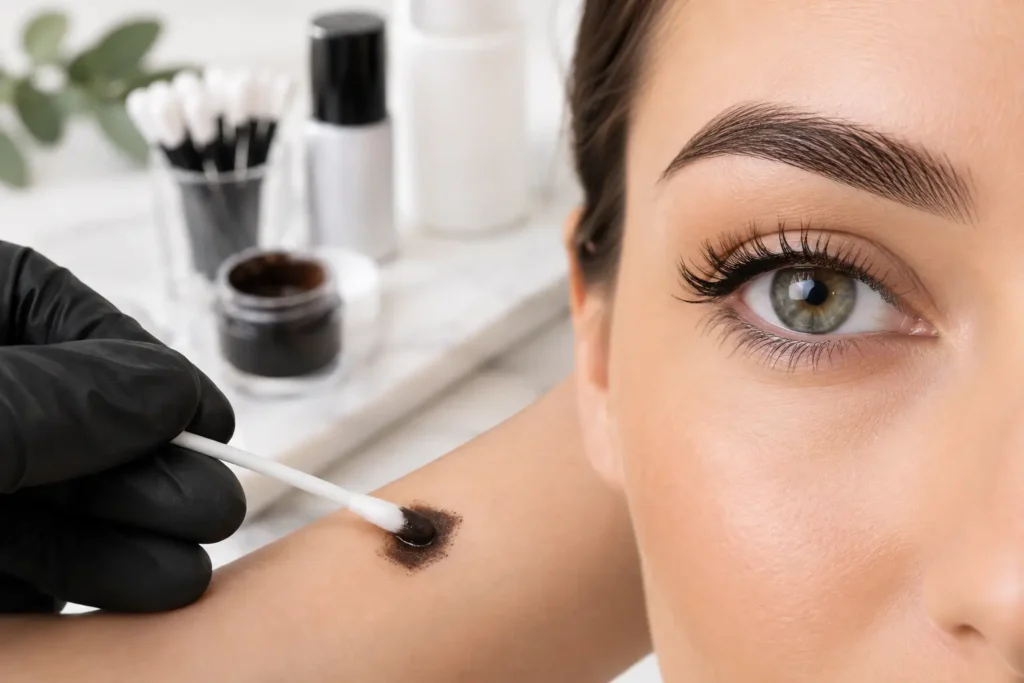
Apply a minimal amount to clean, dry, intact skin in the area recommended in the instructions. This is usually behind the ear or on the inner forearm, but don't treat it as a universal rule for every brand. Use a disposable applicator and don't let used material come into contact with the main product.
Once the processing time is up, remove the mixture according to the instructions. Tell the client to watch the area over the next 24 to 48 hours and to let you know if they feel any discomfort. It's good practice to send a short reminder before the appointment: if there is itching, redness, burning, swelling, or a rash, the procedure is not performed.
How to read the result
A negative test means no signs of a reaction appeared within the specified time. This lets you proceed with the procedure, but it doesn't replace monitoring in the salon. During tinting, the client shouldn't feel strong burning, stinging, increasing itching, or sudden discomfort. If they complain of any of these, remove the product immediately according to the brand's protocol and don't continue tinting.
A positive or questionable test means canceling the procedure. Don't try to “compensate” with a shorter processing time, a lighter shade, less activator, or applying it only to the ends of the brow. These choices don't make the allergen safe. Also don't mix different brands of tint and activator to find a gentler formula. Besides the risk to the client, this makes both the result and the chemical reaction unpredictable.
The most common mistakes in the salon
The first mistake is doing the test with a ready mixture left over from another client. Besides the fact that the ratio and freshness of the mixture are already compromised, this breaks hygiene standards. Each test is prepared individually with clean tools and a separate disposable supply.
The second mistake is testing only at the first visit. With regular tinting, the possibility of sensitization doesn't go away. If your policy calls for periodic testing, apply it to loyal clients too. Consistency matters more than an awkward last-minute conversation.
The third mistake is underestimating informed consent. The client should know that the test isn't a guarantee and that they must report changes in their health, new allergies, or reactions to other cosmetic products. This builds a professional partnership instead of placing all the responsibility on the specialist.
The fourth mistake is lack of traceability. In the client card, note the test date, brand, shade, activator, batch if possible, and the result. When working with hybrid tint, also record the specific system, because switching product lines can mean a different composition. This information makes the next visit easier and gives you control over quality in the salon.
Make safety part of your schedule
The allergy test shouldn't be squeezed in randomly between two procedures. Build it in at the booking stage. When a client books brow tinting, send clear instructions for a preliminary test and offer a short slot 24-48 hours earlier if the product requires it. That way you don't lose working time and don't spring it on the client on the day of the service.
Keep a separate kit for tests: disposable applicators, micro brushes, gloves, a cleansing product, client cards, and up-to-date instructions for each tint. Professional sourcing matters here too. Working with recognizable brands, clear documentation, and consistent stock reduces the risk of improvising. VM Beauty is a partner for specialists who want to keep their workflow organized, from choosing tint and activator to everyday hygiene supplies.
The best tinting result isn't just even color and a clean outline. It's a procedure in which the client feels safe and you can confidently stand behind every step of your professional protocol.



