
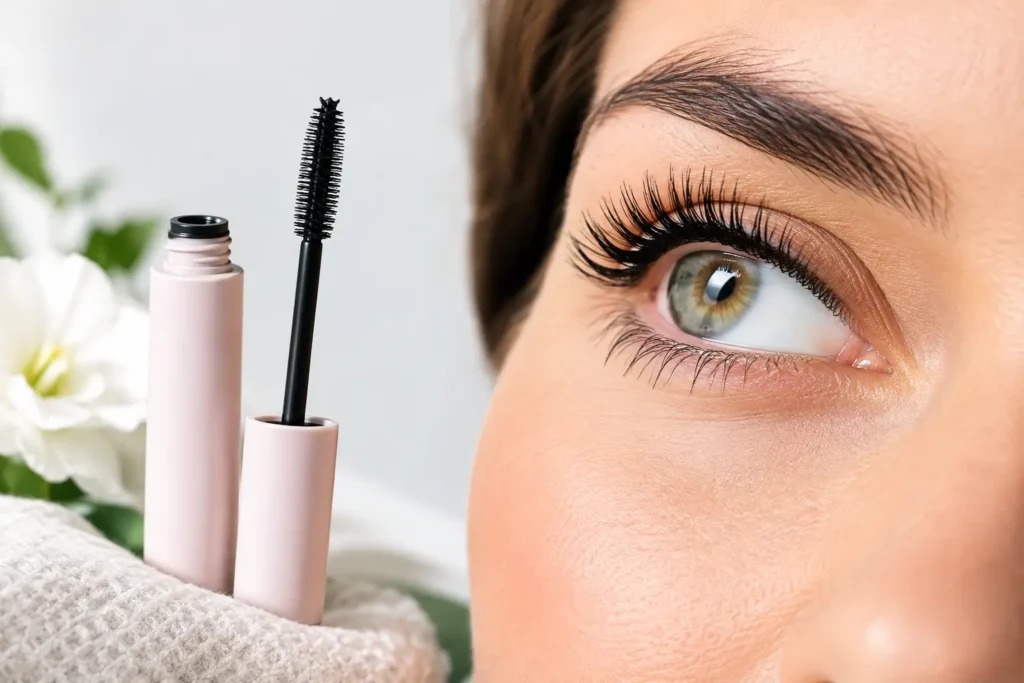


A client with sensitive eyes isn't automatically a client for whom eyelash extensions are impossible. But lashes for sensitive eyes aren't chosen only by the softness of the fibers or the label on the packaging. A comfortable result depends on the entire working system: the consultation, isolation, adhesive, placement, hygiene, and the right response to discomfort.
For the lash artist, this is a procedure where compromising on material or technique costs more than one missed appointment. Eye irritation can lead to premature removal, loss of trust, and the risk that the client won't book the service again. That's why the approach needs to be professional, specific, and free of promises of universal tolerance.
What's behind sensitive eyes
Sensitivity isn't a diagnosis, and it isn't the same for every client. Some react to adhesive fumes during the procedure. For others, the problem is keeping their eyes slightly open for a long time, pressure from the eye patches, residue from a cleansing product, or mechanical irritation from incorrectly placed extensions.
There's also a significant difference between momentary stinging, watering, and a true allergic reaction. Mild burning during the procedure often points to eyelids that aren't fully closed, strong fumes, or incorrect head position. Itching, pronounced redness, swollen eyelids, or discomfort that appears and intensifies after the procedure call for a much more careful approach. The lash artist doesn't make a medical diagnosis but must recognize when to stop the procedure and refer the client to a medical professional.
The pre-procedure consultation isn't a formality
Before booking, ask whether the client has had previous reactions to eyelash extensions, tinting, lamination, or cosmetic products around the eyes. Check whether they wear contact lenses, have active conjunctivitis, inflammation, a recent eye procedure, or are taking treatment that causes dryness and irritation.
With active discomfort, redness, or infection, the procedure is not performed. If the client had a strong reaction after a previous set of extensions, don't present switching to a different adhesive brand as a guaranteed solution. A patch test can provide additional information, but it can't reliably predict the reaction to a full procedure and doesn't replace the client's informed decision.
Lashes for sensitive eyes: how to choose the fibers
The PBT fiber itself is usually not the main cause of a reaction. However, it directly affects how the extension feels on the natural lash and long-term comfort. A heavy set, overly long extensions, or a structure with poorly distributed weight can cause pulling, discomfort, and a feeling of tired eyes.
For a client with sensitive eyes, start with a conservative design. A classic set with the right thickness or a light volume is often a smarter choice than dramatic mega volume. The curl should follow the natural lashes and the shape of the eye, not just the reference photo. When the extension is too heavy or the curl doesn't allow a stable base, the risk isn't only poor retention. It can strain the natural lash and make wearing the set uncomfortable.
Soft, even, and well-made fibers allow for more precise building. Check the strip for sticky residue, how easily the fibers release, and the consistency of the curl. Unpredictable material makes the artist work slower and correct more, and it increases the time the client spends with closed eyes.
The adhesive is the technical core of the procedure
With sensitive clients, the word sensitive is often associated with the adhesive, and for good reason. Cyanoacrylate and its fumes are among the common causes of irritation during application. This doesn't mean a low-fume adhesive is right for every case or that a slower adhesive is always safer.
The choice depends on your working speed and on the temperature and humidity in the room. If the adhesive dries slower than the lash artist's pace, there's a risk of weak bonds and stickies. If it's too fast for the actual technique, placement becomes imprecise and unnecessary corrections are needed. Either way, the client's comfort suffers.
For sensitive eyes, work with an adhesive whose parameters you know in your own working environment. Track the product's freshness, its shelf life after opening, and how it's stored. Shake according to the instructions, replace the drop on time, and don't use an unnecessarily large amount. A bigger drop doesn't mean stronger retention, it increases the volume of fumes and the risk of stickies.
Never use terms like hypoallergenic or risk-free unless the manufacturer supports them with clear documentation. Even a product that many clients tolerate well can cause an individual reaction.
Technique determines whether the client feels the difference
The perfect adhesive won't make up for eyes that aren't fully closed. Before you start, check the client's position and ask them to close their eyes naturally without squeezing the lids. Sometimes a small adjustment of the pillow or the bed's angle is needed for the eyes to close completely.
Eye patches and tape should sit securely without touching the waterline or pulling the lower lashes. For sensitive skin, choose products with a comfortable texture and check on the client a few minutes after applying them. Burning from an eye patch isn't something to endure until the end of the procedure.
Isolation must be clean and systematic. Stickies between natural lashes, or between an extension and a neighboring lash, cause pulling as the lashes grow and can lead to constant discomfort. Take time for a final check from different angles. This is one of the most important steps in any set, but with clients who have sensitive eyes it's a mandatory standard.
Work with clean tweezers, disposable supplies where needed, and a well-cleaned work area. Residue from primer, foam cleanser, remover, or pigment from a previous procedure has no place around the eye area. Organized hygiene is part of quality, not an add-on to it.
Aftercare and clear boundaries
After application, give the client short, specific instructions. They should know that if severe itching, swelling, pain, discharge, or prolonged redness appears, they shouldn't rub their eyes or try to remove the extensions themselves. They need to contact the lash artist, and with severe symptoms, a doctor.
If a reaction is suspected, safe removal by a trained professional is a better option than waiting and hoping the symptoms will pass. Don't recommend home methods with oils, pulling, or aggressive cleansing. They can irritate the eyelid and natural lashes even more.
How to build a reliable work protocol
It's useful for the salon to record the products used, curl, thickness, lengths, and any complaints during the procedure in the client card. That way, at the next visit you won't rely on memory or guesswork. You'll know whether comfort was achieved by changing the eye patches, the position, the design, or the working speed.
Keep a limited but well-tested set of adhesives and supplies instead of switching products randomly with every complaint. When you stock up on professional supplies from VM Beauty, look for technical specifications, consistent quality, and the ability to order on time, not just the lowest unit price.
The best result for sensitive eyes isn't the most voluminous set in the portfolio. It's cleanly applied eyelash extensions that the client wears comfortably, confident that the artist chose a solution based on their real needs.



