
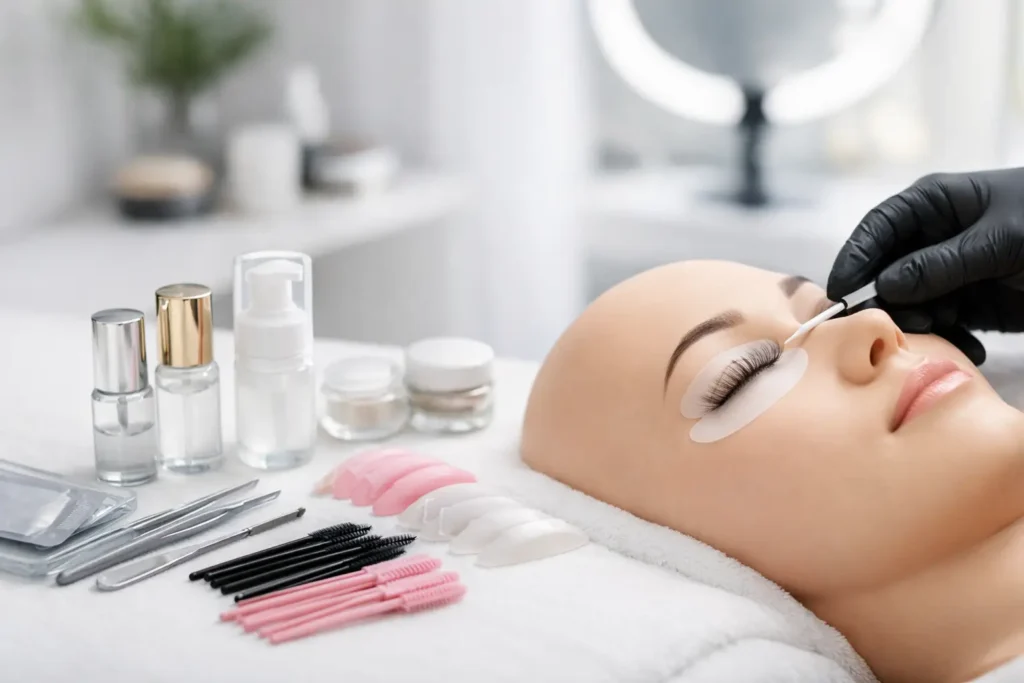


Lamination looks like a short procedure in the schedule, but its quality is decided long before the client lies down on the bed. The right lash lamination kit should provide a clear protocol, predictable processing time, and enough product for the actual flow of appointments in the salon. Randomly combined products from different systems often lead to uneven lift, dried-out lashes, and unnecessary delays.
For a professional, a kit isn't just a starter box. It's a way to standardize the procedure, calculate the cost, and maintain consistent results across different natural lash structures and densities.
What a professional kit should contain
The foundation of every lamination system is the products for the three key stages: shaping the hair, setting the new position, and aftercare. The formulas work in sequence, and the safest approach is for all the steps to come from the same line, unless the manufacturer explicitly allows combining them.
The first product softens the structure of the hair so the lash can take on the curl over the silicone pad. The second sets the shape. The third is a nourishing or restoring treatment that completes the procedure and improves elasticity and shine. In some systems, the treatment is applied as a separate step, while in others it's built into the lamination protocol.
A work kit usually also needs silicone pads in several sizes, an adhesive or balm for attaching the lashes to the pad, lint-free applicators, micro brushes, spoolies, and suitable eye patches for the lower lashes. If the service includes tinting, add hybrid tint or lash tint, a developer, and a non-metal mixing dish. This doesn't mean you have to buy everything in one kit. What matters is having a complete working protocol with no missing step on the day of the procedure.
Lash lamination kit: choosing based on your practice
A beginner usually needs a ready-made system with clear instructions and small sizes. This reduces the risk of incorrectly combining active products and limits the initial investment. A ready-made kit is also practical for trainings, when the instructor wants students to work with a single protocol.
For a salon with a regular client flow, the number of procedures per package, the shelf life after opening, and the option to restock individual products matter more. A package with lots of accessories but a small amount of the active steps may look like a good deal but not cover real usage. On the other hand, a professional system with a higher unit price often has a better cost per service if the dosing is precise and there's little leftover to throw away.
Check whether the sizes are single-dose or multi-dose. Sachets are convenient for controlling hygiene and costs, especially at the start or with fewer procedures per week. Multi-dose bottles can be more cost-effective with high turnover but require discipline in closing, storage, and tracking shelf life after opening.
Don't choose by processing time alone
A short processing time is an advantage only when the specialist works confidently with the specific system and knows how to assess the hair. Fine, porous, or previously treated lashes can react faster than dense, coarse, and straight lashes. The same product isn't mechanically left on for the same time with every client.
Follow the manufacturer's protocol exactly and judge the time based on the condition of the natural lashes. Don't extend processing to get a “stronger curl.” Over-processed hair isn't a sign of a strong result but of a compromised procedure that can lead to complaints and loss of trust.
Pads, setting, and curl control
Even a quality lamination formula won't make up for the wrong silicone pad. A small size creates a more pronounced curl, but with long lashes it can cause excessive bending or make the result look visually shorter. A large pad is suitable when the goal is a natural lift that opens up the eyes, but with short lashes the effect may go unnoticed.
The choice shouldn't be based only on the client's wish for “maximum lift.” Assess the length, growth direction, elasticity, and eyelid shape. With crisscrossing or strongly downward-growing lashes, take more time for clean combing and even setting. Every lash should lie parallel, without crossing and without buildup of adhesive or balm.
Product placement is also crucial. Applying too close to the root increases the risk of unwanted bending, while working too high along the length can leave the base without enough lift. Work with a fine, controlled line and stay within the area specified in the system's protocol.
Tinting and lamination in one service
Combining lamination and tinting makes the effect more visible, especially with light tips and naturally blonde lashes. However, it needs to be organized according to the specific system. Some brands place the tint between the setting step and the final treatment, while others require a different sequence.
Don't mix ratios and timings from memory. Follow the instructions for the tint and developer, keeping in mind that lashes are right next to the eyes. A well-chosen tint should give even coverage without weighing down the hair or causing unnecessary irritation. Black is the standard choice, but a graphite or blue-black shade can give a softer or deeper visual effect depending on the client.
Hygiene and safety aren't an extra step
Lamination is a professional procedure that requires training, good technique, and strict hygiene. Before working, consult the client about sensitivity, previous reactions, eye conditions, recent procedures, and use of products that may affect the eye area. If in doubt, postpone the procedure.
The sensitivity test is done according to the manufacturer's instructions and isn't a guarantee that a reaction will never occur. Even so, it's part of responsible practice, especially with a new client or when switching to a new brand. Use disposable supplies where needed, disinfect your tools and never put a used applicator back into a bottle or jar.
Store products away from direct sunlight, within the recommended temperature, and with the opening date clearly marked. If the texture, smell, or color changes, don't rely on the product, even if it's technically within its shelf life. The small savings from using a questionable product don't justify the risk to the client and the salon's reputation.
How to calculate the real cost of the procedure
The price of the box doesn't on its own show whether a kit is a good deal. Divide the cost of the active products by the actual number of procedures based on dosing, then add the cost of the pad, eye patches, applicators, tint, and the specialist's time. That way you'll see the real cost, not just the promotional price of the kit.
With regular orders, it makes sense to keep a reserve of your most-used supplies: pads in popular sizes, eye patches, micro brushes, and setting product. Running out of one small item can block an appointment that's already booked. For academies and trainers, planning is even more important: the number of kits should follow the number of workstations, not just the number of students.
VM Beauty selects professional systems and supplies for specialists who want to work with a clear protocol, reliable supply, and controllable costs. When you restock, look not only at what's in the kit but at whether it will let you repeat the same clean result with the next client.
The best work kit is the one you know in detail: how it reacts to different hair, how it's dosed, when it needs replacing, and what value it brings to your service. Consistency in these small decisions is what turns lamination from a one-off procedure into a stable, in-demand part of the salon menu.



